




On 26 June 1941, Daugavpils was captured by the German army. A few days later, the persecution of Jews began. The first major site of mass execution became the so‑called Railway Garden behind the city prison, where more than 1,000 men aged 16 to 60 were shot.
On 15 July 1941, an order was issued requiring all Jewish residents to relocate within ten days to the bridgehead fortification, where a ghetto was established (now the Daugavgrīvas Prison). According to various sources, around 14,000 Jews were forced into the ghetto. They included residents of Daugavpils, refugees from Lithuania, as well as Jews from Krāslava, Grīva, Višķi, Indra, Dagda, Ilūkste District, and other towns and settlements across Latgale.
By 5 December 1941, 962 people remained in the ghetto, but half a year later — on 1 May 1942 — nearly 500 Jews were killed with the involvement of V. Arājs unit and local police. A total of 487 people survived. They were transferred to the right bank of the Daugava River, to the fortress, where they worked in workshops.
On 28 October 1943, the remaining prisoners were sent to the Kaiserwald concentration camp near Riga. In the autumn of 1944, the last inmates of the Daugavpils ghetto were transported by steamships to Danzig (Poland) and then distributed among various concentration camps — Bergen‑Belsen and Stutthof. Around one hundred Jews survived, some of whom returned to Daugavpils after the war.
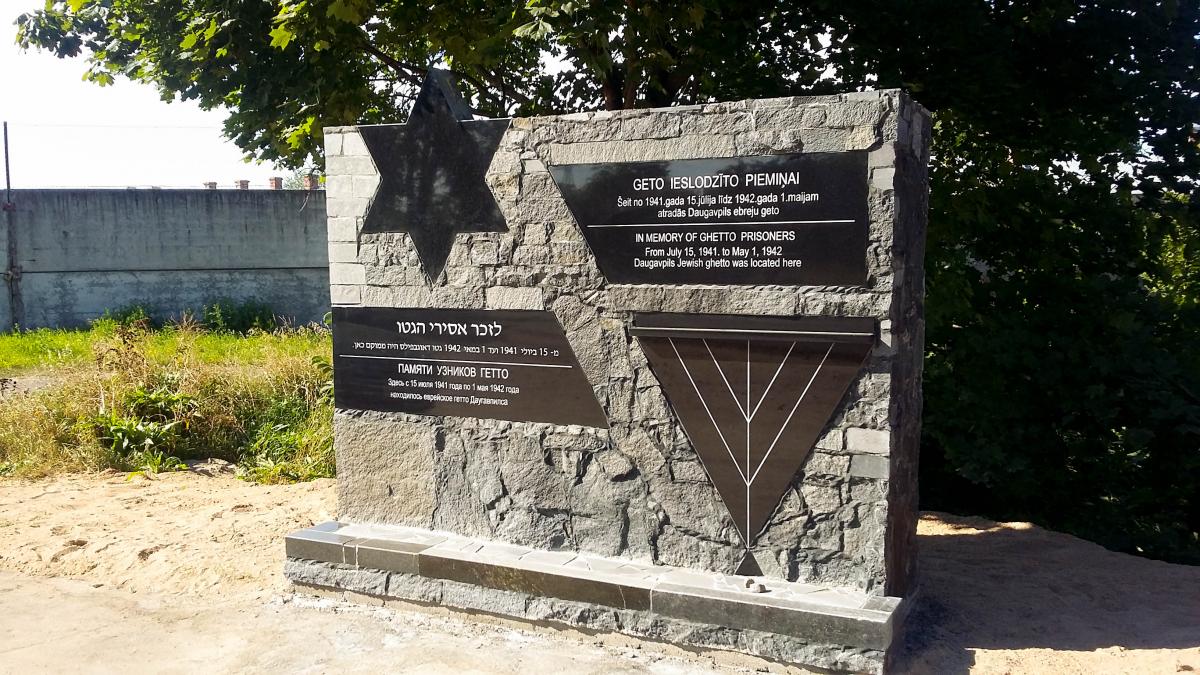
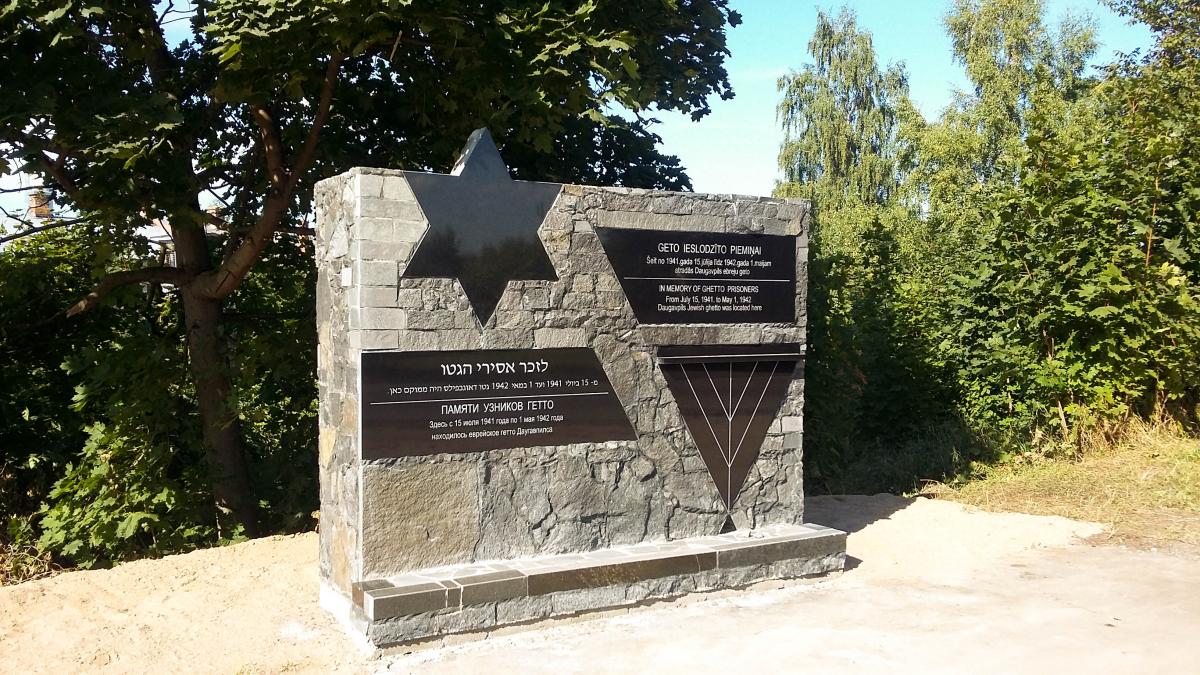
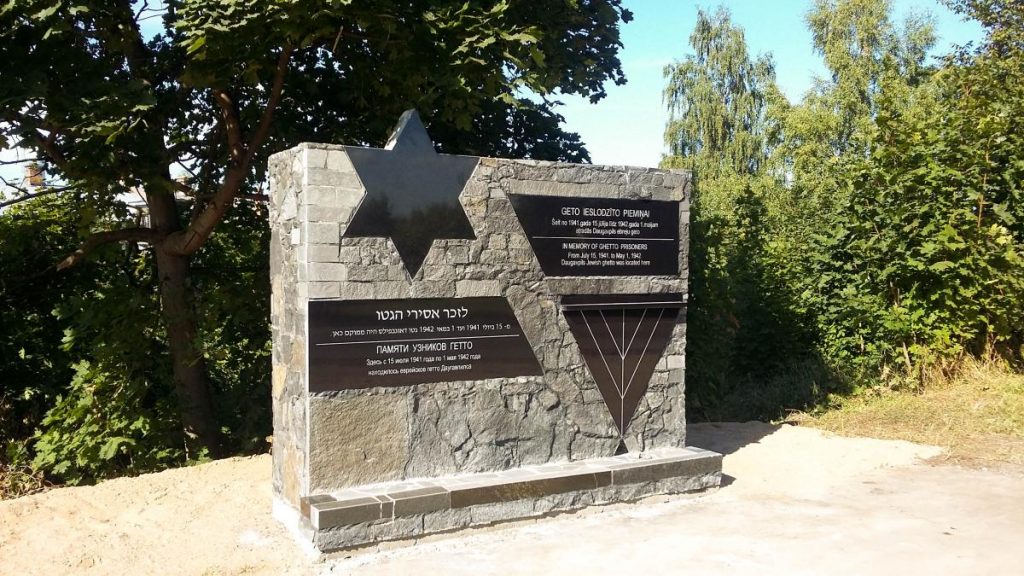
On 6 September 2015, near the Daugavgrīvas Prison, the Jewish community of Daugavpils unveiled a memorial stone bearing inscriptions in English, Latvian, Russian, and Hebrew: “In memory of the ghetto prisoners. From 15 July 1941 to 1 May 1942, the Daugavpils Jewish ghetto was located here.”
The memorial stone was designed by artists Juris Pundurs and Līga Čible, and crafted by Igor Manžos. The materials for its creation were provided by the Daugavpils company “Kvarcits”.